Mental Health Is Everyone’s Business

How everyday understanding, connection and support can help create mentally healthier workplaces and communities

October is Mental Health Month in Australia, and the 2026 theme Together We Thrive places connection and belonging at the centre of the conversation.
Throughout the month, Australians are being encouraged to think about the everyday things that help us connect — spending time together, checking in with a colleague, listening, being present, getting involved in our communities and reaching out to people we haven’t spoken to for a while.
These may seem like small things, but together they highlight an important idea:
Supporting mental health isn’t something that belongs only to mental health professionals.
We all have a part to play.
At Safe Harbour Minds, we often use the phrase:
Because Mental Health is everyone’s business.
But what does that actually mean?
Mental health is part of everyday life
Mental health doesn’t exist separately from the rest of our lives.
We bring it with us to work. It affects our families, friendships and communities. And the environments and relationships around us can influence how connected and supported we feel.
That doesn’t mean everyone needs to become a counsellor or mental health professional.
It means helping to create environments where people feel able to talk, where changes in someone’s wellbeing may be noticed, where stigma doesn’t prevent conversations, and where people have some understanding of how to respond when someone may need support.
Connection can happen in ordinary moments
One of the strengths of this year’s Together We Thrive campaign is its emphasis on ordinary, achievable moments of connection.
The Mental Health Month calendar suggests things as simple as having a coffee and checking in with a colleague, sharing a meal with someone, putting your phone away and giving someone your full attention, or reconnecting with someone you haven’t spoken to in a while.
None of these requires specialist knowledge.
Sometimes connection begins with something as simple as:
“How have you been going?”
And then making the time to genuinely listen to the answer.

Mentally healthier workplaces are built by people as well as policies
Policies, procedures and professional support services all have an important place in workplace mental health.
But workplace culture is also shaped by everyday interactions between people.
Do colleagues feel comfortable checking in with one another?
Would someone feel able to say they were struggling?
Would a noticeable change in a colleague prompt someone to check in rather than simply assume everything was fine?
And if someone did disclose that they were experiencing difficulties, would the person listening feel confident about what to do next?
The Mental Health Month calendar captures this simply with Work Better Together, encouraging people to grab a coffee and check in with a colleague.
The conversation itself might be informal.
The culture that makes that conversation possible is much bigger.
Listening matters
In September, we looked at what happens after we ask someone if they’re OK.
That conversation carries naturally into Mental Health Month.
On 17 October, the Mental Health Month calendar encourages Australians to Listen Together. Its message is simple: taking the time to genuinely listen can strengthen connection, and we don’t need to have all the answers.
When someone talks about something difficult, we can feel pressure to provide an answer, solve the problem or say something reassuring.
Sometimes what the person needs first is simply to feel heard.
Listening means giving someone our attention, allowing them the opportunity to talk and resisting the urge to immediately fix the situation.
Sometimes being present is enough to begin.
Understanding can help reduce stigma
Connection can become more difficult when people are concerned about how others may react to a conversation about mental health.
Building mental health literacy can help.
Greater knowledge and understanding can help people recognise mental health problems, respond more confidently and challenge some of the stigma that can surround mental illness.
This is one of the reasons mental health education matters.
Understanding doesn’t make us mental health professionals.
It can make us better prepared to notice, listen and respond.
Caring is important. Knowing how to respond matters too.
Most people want to help when somebody they know is struggling.
The difficulty is often knowing how.
What should I say?Should I ask about what I’ve noticed?What if they become upset?What if I think they may be in crisis?When should I encourage professional support?
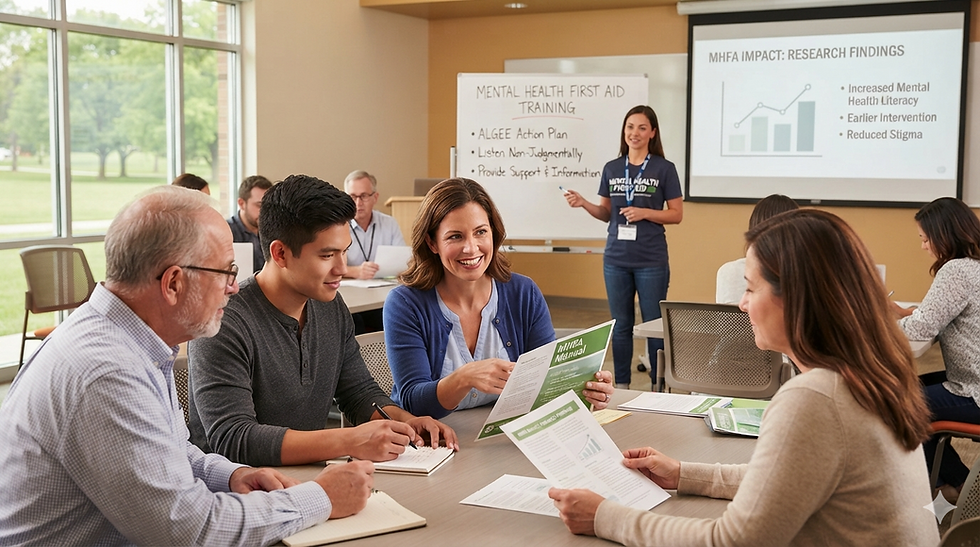
Mental Health First Aid® (MHFA®) training helps people develop the knowledge, confidence and practical skills to recognise and respond when someone may be experiencing a mental health problem or crisis.
It doesn’t turn people into mental health professionals or replace professional care.
Instead, MHFA® training helps people become better prepared to provide initial support and encourage appropriate professional or other support when needed.
World Mental Health Day — a different but complementary message
Within Mental Health Month, 10 October is World Mental Health Day.
The international theme for 2026 is:
Lived experiences heard: real voices, real change
While Australia’s Together We Thrive theme focuses strongly on connection and belonging, the World Mental Health Day theme brings another important perspective.
It asks us to recognise the value of lived experience.
People who have experienced mental health challenges bring knowledge and perspectives that can contribute to the way mental health services, workplaces, organisations and communities understand and respond to mental health.
Being heard means more than simply being given an opportunity to speak.
It means recognising lived experience as a valuable form of expertise and creating opportunities for those experiences to meaningfully inform decisions, services and support.
There is a connection between the two themes:
Connection requires listening. And meaningful listening requires us to value what people tell us about their own experiences.
Together, small actions can become something bigger
The Mental Health Month calendar concludes on 31 October with Thrive Together, encouraging people to reflect on what helped them feel supported during the month and to continue nurturing those connections.
Perhaps that is one of the most important messages we can take from Mental Health Month.
The conversations and connections don’t need to finish when October does.
Check in with the colleague who has seemed a little quieter.
Make time for the friend you’ve been meaning to call.
Listen when someone needs to talk.
Learn more about mental health.
Know where professional support is available.
And build the confidence to respond when someone needs you.
Creating mentally healthier workplaces, families and communities isn’t the responsibility of one profession, one organisation or one awareness day.
Because Mental Health is everyone’s business.
Learn the skills. Make a difference.
Safe Harbour Minds provides Mental Health First Aid® (MHFA®) training to help people develop the knowledge, confidence and practical skills to recognise and respond when someone may be experiencing a mental health problem or crisis.
References
Mental Health Australia — Together We Thrive: This year’s Mental Health Month theme
Mental Health Australia — World Mental Health Day 2026 / Mental Health Month
World Health Organization — World Mental Health Day 2026: Lived experiences heard: real voices, real change
Mental Health First Aid Australia — Standard Mental Health First Aid®
Mental Health Australia — Together We Thrive: October 2026 Mental Health Month Calendar